

Author: Douglas Carl
-
Running Jobs on Discover using Slurm
Submit a job In general, you will create a batch job script. Either a shell script or a Python script is allowed, but throughout the user guide we use only shell scripts for demonstration. You will then submit the batch script using sbatch; the following example requests 2 nodes with at least 2GBs of memory…
-
Slurm Best Practices on Discover
The following approaches allow Slurm’s advanced scheduling algorithm the greatest flexibility to schedule your job to run as soon as possible. Learn how to request Cascade Lake, or Milan nodes to run your slurm job.Inline directives (#SBATCH) should be included in the beginning of your job script.See “man sbatch” for the corresponding command line options. Feel free to…
-
Using Slurm
NCCS provides SchedMD’s Slurm resource manager for users to control their scientific computing jobs and workflows on the Discover supercomputer. This video gives instructions on how users can submit jobs to be scheduled, specifying resource requests such as CPU time, memory, as well as other options for optimizing productivity. Use Slurm commands to request both…
-
Using Cron on Discover
Cron is available via the alias “discover-cron”. Rather than enabling cron on every login node, discover-cron is a single login class node that handles all of the cron work on Discover. It has access to all of the same GPFS filesystems as the other Discover nodes as well as the same NFS filesystems as the…
-
Using Cron on ADAPT
Cron is available via the alias “cron201”. Rather than enabling cron on every node, cron201 is a single node that handles all of the cron work on Explore. It has access to all of the same filesystems as the other Explore nodes, as well as the same NFS filesystems as the login nodes. To get…
-
Conda Environments
Creating a Conda environment or installing a package causes an indefinite hang.
-
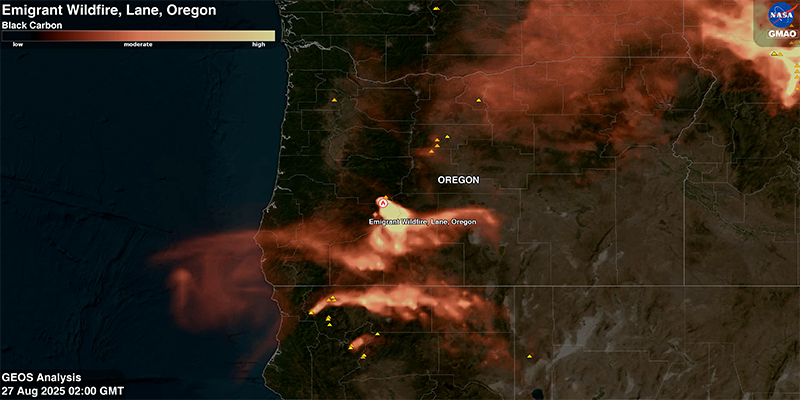
Daily Visualizations of the Largest Wildfires in the United States
NASA’s Scientific Visualization Studio (SVS) and Global Modeling and Assimilation Office (GMAO) are sharing daily updated visualizations of the two largest active wildfires events in the continental United States throughout fire season. Leveraging NASA’s Goddard Earth Observing System (GEOS) model, the SVS and GMAO target the precise locations of these fire events and generate visualizations…
-
Large Resource Request
My job requires more time or resources than are currently allowed.
-
CSS Read Performance
Reading from CSS in parallel is very slow on Discover.
-
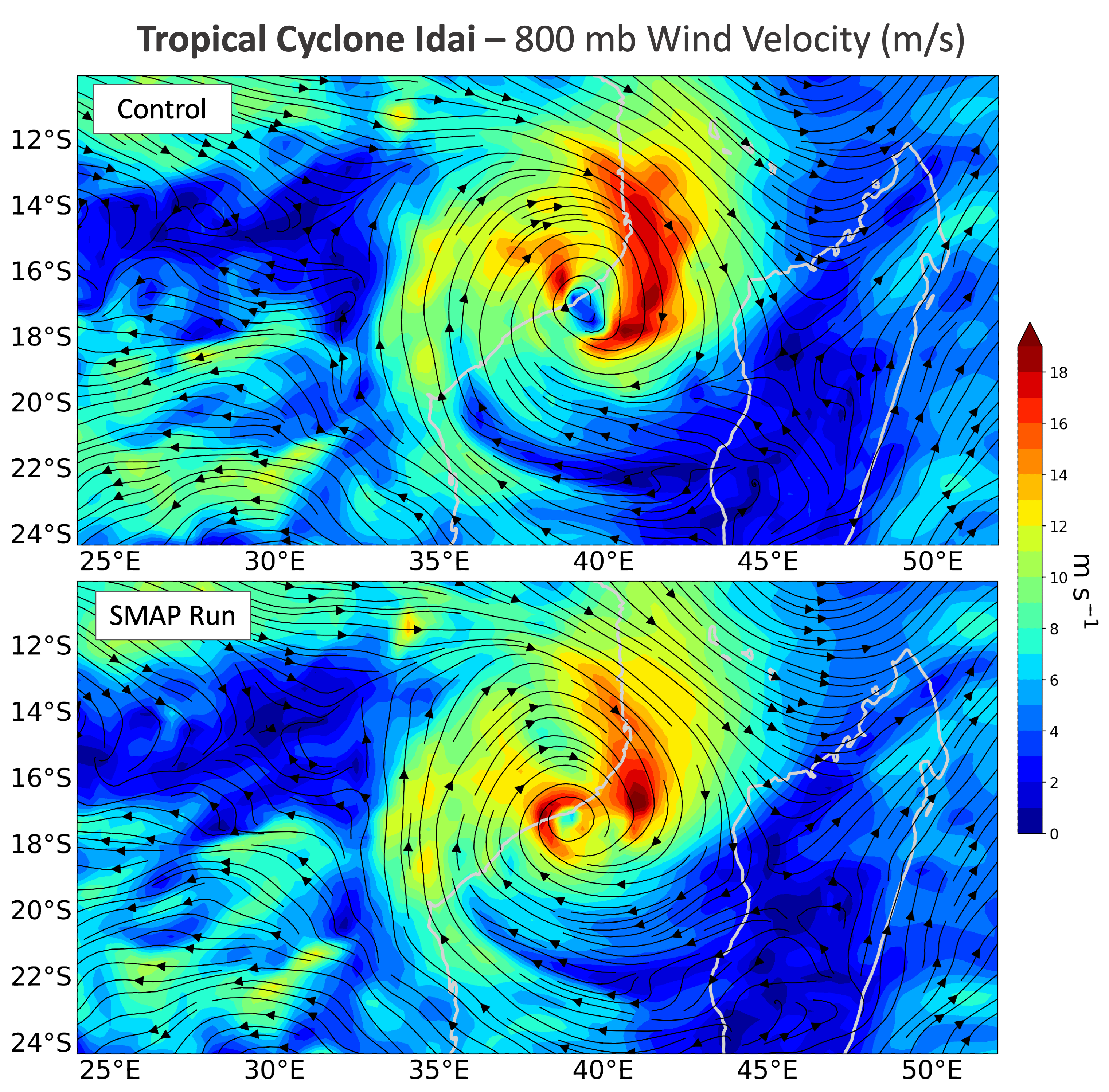
SMAP Radiance Assimilation Over Land Improves Analysis and Prediction of Tropical Cyclone Idai
A recently published paper from NASA Global Modeling and Assimilation Office (GMAO) scientists shows how data assimilation of soil moisture into GEOS — running at the NASA Center for Climate Simulation (NCCS) — can help improve modeling of tropical cyclones that interact with land.